
Why Your Miniature Isn’t Shipping Tomorrow (And That’s a Good Thing)
This Isn’t Amazon
If you’re ordering a made-to-order print a few days before your game and hoping it lands exactly on time… you’re gambling.
Sometimes it works.
Sometimes it doesn’t.
And when it doesn’t, the solution isn’t “can you just rush it real quick?”
Because no—I can’t. Not without turning it into something you’d immediately complain about anyway.
The Part Nobody Sees
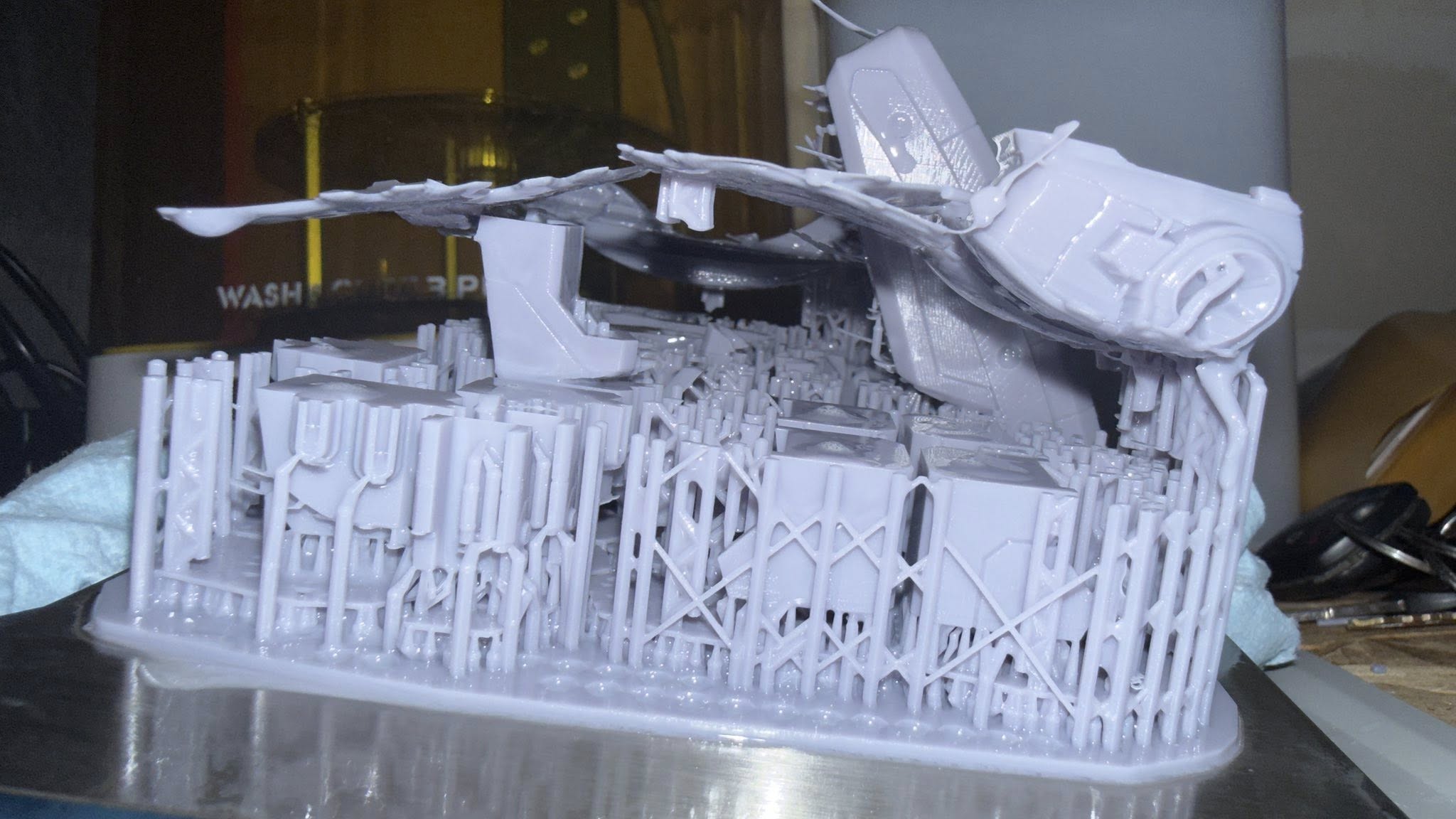
Running a print shop isn’t fast. It can’t be.
There’s no magic “go faster” button. A 10-hour print takes 10 hours. If I try to cut that down, you don’t get a faster piece—you get a worse one.
After that, it still needs to be cleaned, cured, inspected, and sometimes reprinted if it doesn’t meet standard.
That’s before assembly even starts.
I had a piece recently where the base came in five parts—cool in theory, until you’re three hours deep into assembly, gap filling, and cleanup… just for the base.
One piece. Three hours. Everything else waits.
And before anyone thinks the solution is “just run more printers”—I already am. I’ve got 10 machines running, and I’m out of space to add more until I expand.
On top of that, just managing those machines—building plates, cleaning prints, and swapping jobs—already eats up 3–4 hours of my day before I even touch assembly or cleanup.
Because more machines don’t fix hands-on work.
That’s made-to-order.
And right now—it’s just me.
Where It Gets Interesting
Collectors? No issues.
They spend real money on something they want to look right, and they understand that rushing it defeats the entire purpose. I appreciate the hell out of that.
The problems almost always come from last-minute tabletop orders.
“I’ve got a game this weekend, can you make sure it gets here in time?”
Short answer: maybe.
Long answer: you probably should’ve ordered sooner.
A Real Conversation
I had someone tell me recently:
“It’s not my problem. You should hire someone if you can’t meet the deadline.”
The order shipped two days after the estimate.
Two.
Meanwhile I’ve got other orders that are actually behind because I’m not cutting corners to pretend everything is on time.
And that’s the difference.
If your expectation is that I rush your order, skip other people in line, or lower the quality just to hit a date—you’re in the wrong shop.
And if you’re the type to throw ultimatums around over a couple of days, get your order, and then act like that’s normal behavior… don’t worry—I solve that problem on my end.
You’ll get your piece.
You just won’t get the chance to order again.
I’ll do just fine without your business.
There’s a wait for a reason.
Let’s Be Clear
Estimates are estimates.
They’re not guarantees, deadlines, or ultimatums waiting to happen.
And if your response to a slight delay is “ship it by this date or I cancel,” you didn’t read what you agreed to—and I’m not restructuring my process because of it.
Harsh? Maybe.
Accurate? Also yes.
The Reality Check
Here’s where I’m at:
The queue is growing. Demand is growing. And I physically cannot work more hours than I already am without either burning out or letting quality slip.
Neither of those are happening.
So the real options are simple:
- Cut back on time-heavy services
- Charge appropriately for the ones that eat hours
- Or limit certain options so I’m not spending half a day on a single base
Because “just go faster” isn’t a real option.
The Tradeoff
If your piece shows up a couple days late but it’s clean, solid, and actually looks like it should—that’s the trade.
If you need something by a specific date, plan ahead or grab something pre-made. I carry Nolzur’s Marvelous Miniatures and official Warhammer pieces that are ready to go, or better yet—support your local game shop and grab something off their shelf.
Because rushed work is how you end up with something you complain about later.
And I’m not interested in making something twice just because it needed to be fast the first time.
I don’t do rushed work.
I do work that holds up when you actually get it in your hands.
Pick one.
Where This Is Going
The goal is to open a small local shop by the end of the year and bring in help.
More hands means better throughput without sacrificing quality—faster turnaround without cutting corners.
Until then, this is still a one-man operation.
And it’s going to run like one.
Final Thought
At the end of the day, something has to give—and it’s not going to be quality.
So let me ask you this:
If you were in my position—limited time, growing demand, and every piece requiring real hands-on work—what would you do?
Would you cut back on services that eat hours?
Charge more for the ones that do—knowing it’ll probably reduce overall sales, but increase the number of quality orders?
Or limit certain options so you’re not spending half a day on a single base?
Because those are the real choices.
Not “just go faster.”
This isn’t a YouTube video—you don’t get to hit 2x speed and skip to the finished product.
So if you’ve made it this far, think about it from the other side of the table.
What would you change… without lowering the quality of the thing you’re selling?
Because “just go faster” isn’t a solution—it’s how you ruin the product.


